
The Role of Enzymes in Detergent Products
Introduction
With the global detergent enzymes market already near 1.5 billion dollars and growing about 4 to 7 percent a year, enzymes in detergent are now a core part of modern cleaning. Traditional detergents struggle with dried food, body soils, and stains that need high temperatures or strong chemicals.
Enzyme laundry detergent changes that picture. By adding targeted detergent enzymes, brands boost cleaning performance, support cold-water washing, and move closer to energy and water saving goals without a harsher chemistry load.
What Are Detergent Enzymes and Why Do They Matter?
Detergent enzymes are special protein molecules that speed up how stains break apart in enzyme based detergent. Instead of scrubbing or raising wash temperature, they help the wash liquor attack soil faster and more selectively.
The global market is growing steadily as brands standardize enzymes in laundry detergent for both premium and mass products. Eco-friendly detergent enzymes support bio-enzymatic cleaning, where biology does more of the work, and chemical dosage can stay lower. This balance is central to many sustainable cleaning solutions and corporate climate targets.
How Enzymes Work at the Molecular Level in Laundry
At a simple level, enzymes act like tiny tools or scissors. Each type fits a certain stain, locks onto it for a moment, then cuts large soil molecules into smaller, water-soluble pieces.
Because enzymes work well at moderate temperatures and milder pH, they let detergents clean effectively in cooler water. That shift supports eco-friendly washing and helps reduce energy use per load.
Read also : Detergent Enzymes And Their Impact On The World
Key Enzymes Used in Detergent and the Stains They Target
Most successful enzyme laundry detergent formulas use a blend of enzymes, not just one. These industrial cleaning enzymes each focus on a different family of stains.
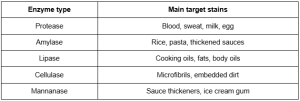
This mix gives broad coverage for daily laundry and heavy-duty textile applications.
Protease, Amylase, and Lipase for Everyday Food and Sweat Stains
For household and institutional laundry, three enzyme groups do most of the work:
- Protease targets protein stains like blood, sweat, milk, and egg on shirts and linens.
- Amylase attacks starchy soils from rice, pasta, potatoes, and thickened sauces.
- Lipase breaks down oils and fats in salad dressings, frying splashes, and greasy collars.
Together, these detergent enzymes lift the most common kitchen and body soils without needing very hot wash cycles.
Cellulase and Mannanase for Brighter Fabrics and Cleaner Collars
Cellulase works on cotton fibers, shaving off tiny fuzz and trapped dirt so colors look brighter and fabrics feel smoother. It can also help prevent graying over many wash cycles.
Mannanase focuses on gum-based thickeners in sauces, gravies, and ice creams that stick to cuffs and collars. By cutting these sticky chains, it helps other ingredients wash residues away more completely.
Benefits of Enzyme-Based Detergents for Performance and Sustainability
When brands add enzymes in detergent, they gain both cleaning power and sustainability benefits. Typical advantages include:
- Stronger stain removal, especially for food and body soils
- Effective cold-water washing, which can cut energy per load by double-digit percentages
- Lower chemical load, since enzymes target soils so surfactants can work more efficiently
Market studies that project around 6 to 7 percent CAGR link this growth to brands using eco-friendly detergent enzymes to hit energy and water reduction targets while keeping consumers satisfied with stain performance.
What Detergent Manufacturers Should Know About Enzyme Formulation
For detergent manufacturers, success with enzymes used in detergent starts with the right blend. Protease, amylase, lipase, cellulase, and mannanase levels must match the target stain profile, wash temperature, and pH of the final product.
Formulators also need to think about stability in storage and transport, especially in high-heat regions. Many brands partner with experienced enzyme manufacturers in India, such as Ultreze, to access cost-effective production, strong quality systems, and application support from pilot work through scale-up.
Customized Enzyme Blends and Technical Support from Ultreze
Ultreze supports detergent brands that need custom enzyme blends aligned with their fabric care claims and regional wash habits. The company combines manufacturing strength in India with tight quality control and technical help during formulation, plant trials, and launch.
Detergent producers and B2B buyers can contact Ultreze for custom detergent enzymes, technical data, and guidance on optimizing enzyme dosage for both performance and cost.
FAQs About Enzymes in Laundry Detergent
Are enzymes in detergent safe for fabrics and modern washing machines?
When dosed correctly, detergent enzymes are safe for most fabrics and are widely used in modern machines. They support gentle, lower-temperature washing that often extends garment life.
Can enzyme laundry detergent replace harsh chemicals completely?
Enzyme based detergent reduces the need for some harsher ingredients by targeting stains more precisely. Most commercial formulas still use a balanced mix of surfactants, builders, and detergent enzymes for best overall performance.
Do eco-friendly detergent enzymes really save energy and water?
Yes, bio-enzymatic cleaning allows shorter, cooler wash cycles that cut energy per wash. Better first-time stain removal also reduces repeat washing, which supports water-saving and broader sustainable cleaning solutions.
Conclusion
Detergent enzymes give modern laundry products stronger stain removal, support bio-enzymatic cleaning, and help brands move toward ambitious sustainability goals. By working with experienced enzyme manufacturers in India such as Ultreze, detergent producers gain access to tailored blends, robust quality, and practical application support.
Manufacturers, industrial cleaners, and procurement teams who want to improve both performance and environmental metrics can speak with the Ultreze team to explore customized detergent enzyme solutions that fit their markets and product ranges.
Share


