Introduction
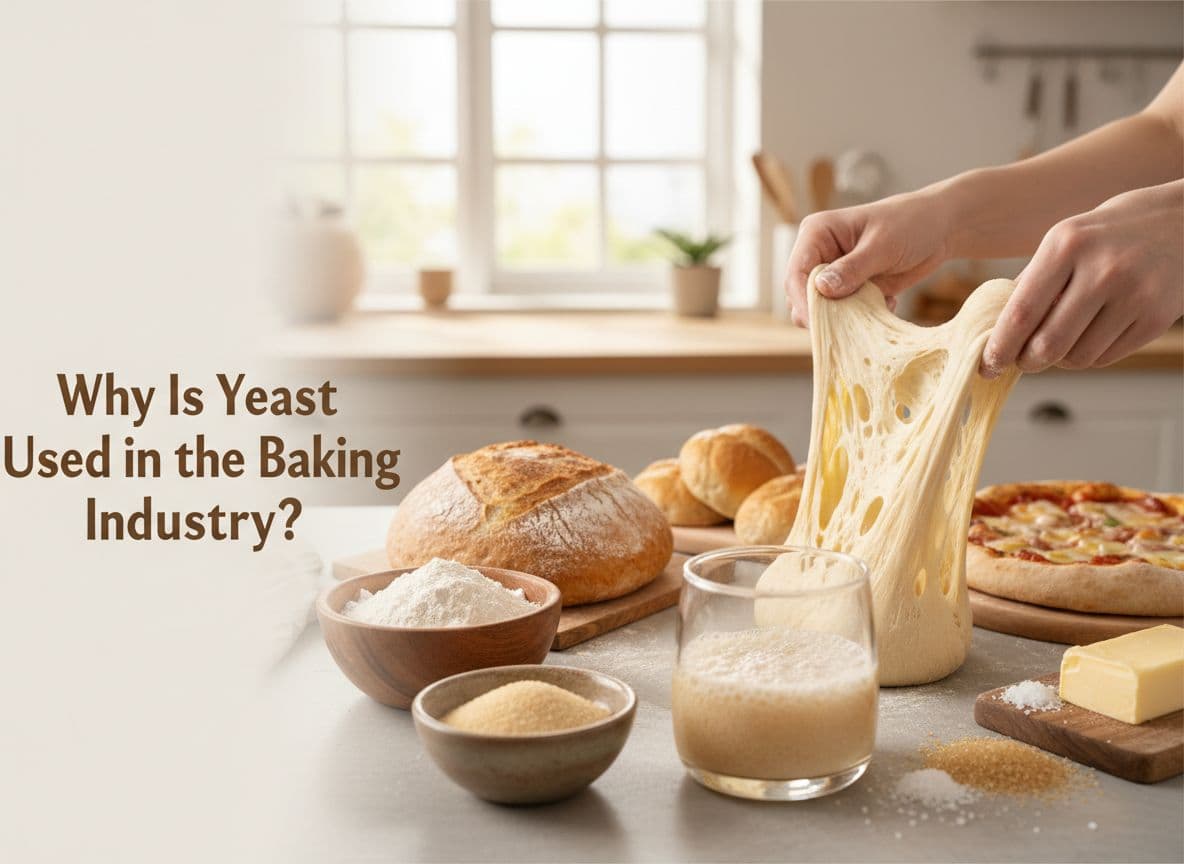
The smell of fresh bread pulling from the oven is almost universal. Behind that soft crumb and golden crust sits a small but powerful helper: yeast. When people ask why is yeast used in baking industry, the short answer is simple. It makes dough rise, shapes flavor, improves texture, and keeps production predictable at scale.
This article explains what yeast is, the role of yeast in baking industry operations, how it supports product quality, and how modern enzymes now work beside it.
What Is Yeast And Why Does It Matter In Baking?
When bakers ask what is yeast, the practical answer is a living microorganism, usually Saccharomyces cerevisiae. It acts as a natural fermentation agent and leavening microorganism.
Yeast in baking industry settings eats sugars, releases gas, and turns heavy dough into light bread, rolls, and sweet goods.
A Simple Look At How Yeast Works In Dough
In dough, yeast feeds on sugars and produces carbon dioxide and small amounts of alcohol. The gas gets trapped in the gluten network, so the dough expands.
Most bakeries aim for dough temperatures around 75–85°F, where yeast fermentation in bread is active but still easy to control.
Key Functions Of Yeast In Bread Making And Baking
The main function of yeast is leavening, but its impact reaches much further. The role of yeast in bread making includes gas production, steady proofing times, and reliable dough strength.
The importance of yeast in baking industry lines comes from predictable volume, even crumb, and repeatable behavior across shifts and plants. Uses of yeast in baking also cover sweet breads, buns, and frozen doughs.
Leavening: How Yeast Makes Bread Light And Airy
During yeast fermentation in bread, carbon dioxide stretches the gluten network and opens the crumb.
Without active yeast, soft sandwich loaves or burger buns would bake flat, with tight, heavy centers and poor slice quality.
Flavor, Aroma, And Texture: The Hidden Gifts Of Yeast
Long, cool fermentation lets yeast build acids, alcohols, and flavor compounds that shape the aroma of baguettes and artisan loaves.
This activity improves crust color, softness, and eating quality, which explains the importance of yeast for customer appeal and brand loyalty.
Types Of Yeast Used In Bakery Production
The main types of yeast in baking are fresh compressed yeast, active dry yeast, and instant yeast. These types of yeast used in bakery operations differ in strength, shelf life, and handling.
Fresh and cream yeast give fast fermentation, while active dry and instant suit longer storage and packaged mixes.
Commercial Vs. Home Baking: How Yeast Use Changes With Scale
Large plants often use cream or fresh yeast in bulk tanks for accurate dosing and cost control. Home bakers usually prefer active dry or instant in small sachets.
Each format helps control proofing time, which keeps line speed and product size steady.
Why Yeast Matters For Business: Quality, Consistency, And Shelf Life
For production managers, the industrial importance of yeast is clear. Stable fermentation cuts waste, supports uniform loaf weight, and meets retailer specifications.
When asking what is yeast used for economic importance, bakers point to fewer rejects, better shelf life, and better use of flour and energy. Good yeast management also reduces returns linked to low volume or dryness.
Yeast Working Together With Enzymes In Modern Bakeries
In many formulas, yeast is used in combination with targeted enzymes for baking industry needs. Amylase enzymes, often alpha-amylase, break starch into simple sugars that feed yeast.
This improves gas production, dough handling, volume, and long-term softness, especially in sliced bread and buns.
Modern Innovations: How Yeast And Enzymes Shape The Future Of Baking
New yeast strains support sweet, high-sugar doughs, frozen dough systems, and faster proofing for industrial lines. At the same time, modern food enzyme applications help improve softness, resilience, and anti-staling effects.
Together, advanced yeasts and tailored enzyme systems let companies like Ultreze help bakers fine tune quality, clean labels, and efficiency.
Conclusion: Why Yeast Still Sits At The Heart Of The Baking Industry
The importance of yeast in baking industry production comes down to three things. It lifts dough, builds flavor and texture, and anchors consistent output at scale.
A clear view of the role of yeast in baking industry settings helps bakers choose the right types, adjust fermentation, and control costs. Enzyme partners such as Ultreze Enzymes provide complementary solutions that help yeast perform even better in modern, high-output bakeries.
FAQs About Yeast In The Baking Industry
What is the role of yeast in baking?
Yeast ferments sugars in dough, produces gas that makes bread rise, and develops flavor and texture, so the baking industry relies on it for quality bread.
Why is yeast important in the baking industry?
Yeast is important because it gives bread and other products their volume, softness, and taste, and supports consistent quality across large commercial batches.
What are the main types of yeast used in bakeries?
The main types are fresh compressed yeast, active dry yeast, and instant yeast, each offering different benefits for speed, shelf life, and handling.
How do enzymes help yeast in bread making?
Enzymes such as amylase break starch into sugars that feed yeast, supporting stronger fermentation, better loaf volume, and longer lasting softness.