
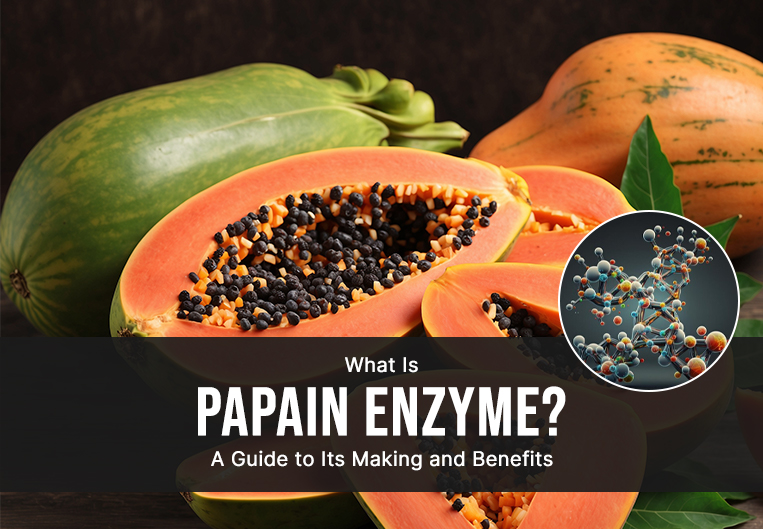
What Is Papain Enzyme? A Guide to Its Making and Benefits
5 August 2024
Table of Contents
ToggleKey takeaways
- Papain enzyme is a protein-digesting enzyme from papaya latex.
- It is used in digestive supplements, meat tenderizers, and skincare formulas.
- The main papain enzyme function is breaking proteins into smaller pieces.
- Choose products that list enzyme activity and clear directions, especially for papain enzyme tablets.
- Avoid papain if you have papaya or latex allergy, bleeding risks, or an upcoming surgery.
Papain enzyme is a protein-digesting enzyme found in papaya. You may see it in digestive enzyme supplements, meat tenderizers, and enzyme-based skincare products. Because it breaks down proteins, papain enzymes show up in both wellness routines and food preparation.
This guide explains what papain is, how it works, how it is made, common papain enzyme benefits, and key safety tips. You will also learn the most common papain enzyme uses so you can choose the right form with confidence.
This article is for general education. If you are pregnant, breastfeeding, have a medical condition, or take prescription medicines, ask a clinician before using papain supplements or strong topical enzyme products.
What is papain enzyme?
Papain (also called papaya proteinase I) is a proteolytic enzyme. That means it helps break proteins into smaller peptides and amino acids. In scientific terms, it is a cysteine protease.
Papain enzyme in papaya: where it comes from
Papain enzyme in papaya is most concentrated in the latex (sap) of unripe papaya fruit. Most commercial papaya papain enzyme products come from Carica papaya.
Papain vs. papaya
Papaya is the fruit. Papain is one specific enzyme that can be extracted, dried, and used in products. Some labels may also mention pure papain enzyme, which usually means it is more concentrated and less blended with other enzymes.
How does papain work?
Proteins are made of long chains of amino acids. Papain helps by cutting peptide bonds in those chains. This matters because:
- In digestion: Smaller protein pieces can be easier to break down.
- In cooking: Breaking down protein fibers can make meat more tender.
- In skincare: Controlled protein breakdown can support gentle exfoliation.
Enzymes are sensitive. Heat, moisture, and storage can change their strength. That is why sealed packaging and cool, dry storage helps protect activity.
How is papain made ?
Papain production can vary, but most manufacturers follow the same basic process:
- Harvest unripe papayas while latex content is high.
- Collect papaya latex (sap) using small surface cuts.
- Filter and clean to remove debris and reduce impurities.
- Dry the filtered material (often spray-dried or freeze-dried).
- Mill and standardize into powder. Many brands list activity units on the label.
- Package to reduce exposure to heat and moisture.
Why quality can vary: The papaya source, drying method, and whether the product is standardized can all affect results.
Papain enzyme benefits
Results depend on the product, dose, and your body. These are the most common areas people look at.
1) Digestive support after protein-heavy meals
Papain is often used for digestive comfort, especially after high-protein meals. It is common in blends with bromelain, lipase, or amylase.
If you want a convenient option, papain enzyme tablets are popular because they are easy to carry and simple to dose.
Use with care if: you have chronic stomach pain, ulcers, or unexplained weight loss. Get medical advice instead of self-treating.
2) Smoother-looking skin
Papain enzyme for skin is usually found in enzyme masks, cleansers, and exfoliating treatments. Many people prefer enzyme exfoliation because it can feel gentler than rough scrubs.
Best practice: Patch test first. Follow product directions. If your skin is sensitive, do not stack strong acids and enzyme masks on the same day.
3) Swelling and soft-tissue comfort
Proteolytic enzymes are sometimes used for swelling or soft-tissue discomfort. Evidence is mixed, and this is not a replacement for medical care.
Use with care if: you take blood thinners, have a bleeding disorder, or have surgery planned.
4) Mucus and sinus comfort
Some people discuss enzymes for mucus thickness because mucus contains protein structures. Human evidence specific to papain is limited. If sinus problems keep coming back, talk with a clinician to treat the cause.
Read More : Top 11 Benefits of Digestive Enzymes
Common papain uses
Papain is used in many categories. Here are the most common.
1) Digestive enzyme supplements
You will find papain in capsules, chewables, powders, and papain enzyme tablets. Always follow the label.
If you are comparing options to buy papain enzyme tablets, look for:
- Clear enzyme activity (not just “mg”)
- Trusted manufacturing and testing
- Simple directions and allergen warnings
2) Meat tenderizer
Papain is a classic meat tenderizer because it breaks down muscle proteins.
How to use it without ruining texture
- Start small. A little goes a long way.
- Use a dry rub or short marinade.
- Do not leave it on too long, or meat can turn mushy.
- Marinate in the fridge and prevent cross-contamination.
3) Skincare products
Papain appears in masks and cleansers. Choose a properly formulated product. Avoid DIY raw papaya on irritated skin, since it can sting and cause a rash.
4) Wound care products
Some enzyme-based products are used for wound debridement in clinical settings. This is not a home DIY use. Only use products designed for wounds under professional guidance.
5) Dental applications
Papain is included in some oral care products and has been explored in dental contexts. If you see it in toothpaste or gels, keep expectations realistic and follow your dentist’s advice.
6) Contact lens cleaners
Some cleaning systems use enzymes to remove protein deposits from lenses. Only use products approved for your lens type.
7) Lab and manufacturing uses
Papain is also used in lab and industrial processes where proteins need to be broken down in controlled conditions.
Papain tablet uses: what people take it for
People most often choose papain tablets for:
- Support after heavy meals (especially high-protein meals)
- Travel-friendly digestive support
- Consistent daily routines (when approved by their clinician)
If you are shopping, search terms like best papain enzyme supplement, papain enzyme tablets price, or order papain tablets online often lead to comparable products. Still, the label details matter more than the marketing.
Safety, side effects, and who should avoid papain
Papain is not risk-free, especially in concentrated supplement or topical forms.
Possible side effects
- Stomach upset, nausea, diarrhea (supplements)
- Skin irritation, redness, stinging (topical products)
Allergy risks
- People allergic to papaya may react to papain.
- People with latex allergy may have cross-reactions. Be extra cautious.
Drug interactions and cautions
- Blood thinners or medicines that affect bleeding
- Bleeding disorders
- Upcoming surgery or dental procedures
- Pregnancy and breastfeeding (safety depends on product and dose)
- History of severe allergies
Stop use and seek care if you have trouble breathing, swelling of lips or face, hives, or severe throat irritation.
Quick FAQ
1) What is the main papain enzyme function?
The main function is to break proteins into smaller pieces. This is why it is used in digestion support and meat tenderizers.
2) Is papain the same as bromelain?
No. Papain comes from papaya. Bromelain comes from pineapple. Both break down proteins, but they are different enzymes.
3) Can I take papain enzyme tablets every day?
Some people do, but it depends on the product and your health. Follow the label and ask a clinician if you take medicines or have ongoing symptoms.
4) Does papain enzyme for skin work for everyone?
Not always. Some people love enzyme exfoliation, but sensitive skin can react. Patch test and start slow.
5) How do I choose a good papain supplement?
Look for clear enzyme activity, simple ingredients, and strong safety labeling. If you are unsure, ask a pharmacist or clinician.
Final takeaway
Papain enzyme is a well-known proteolytic enzyme from papaya latex with real-world value in digestion support, skincare, and food preparation. The best results come from choosing the right product type, following directions, and taking safety seriously.
If you want help picking the right option (powder vs capsules vs tablets), comparing labels, or deciding whether a digestive enzyme supplement fits your needs, contact us today.
Share


