
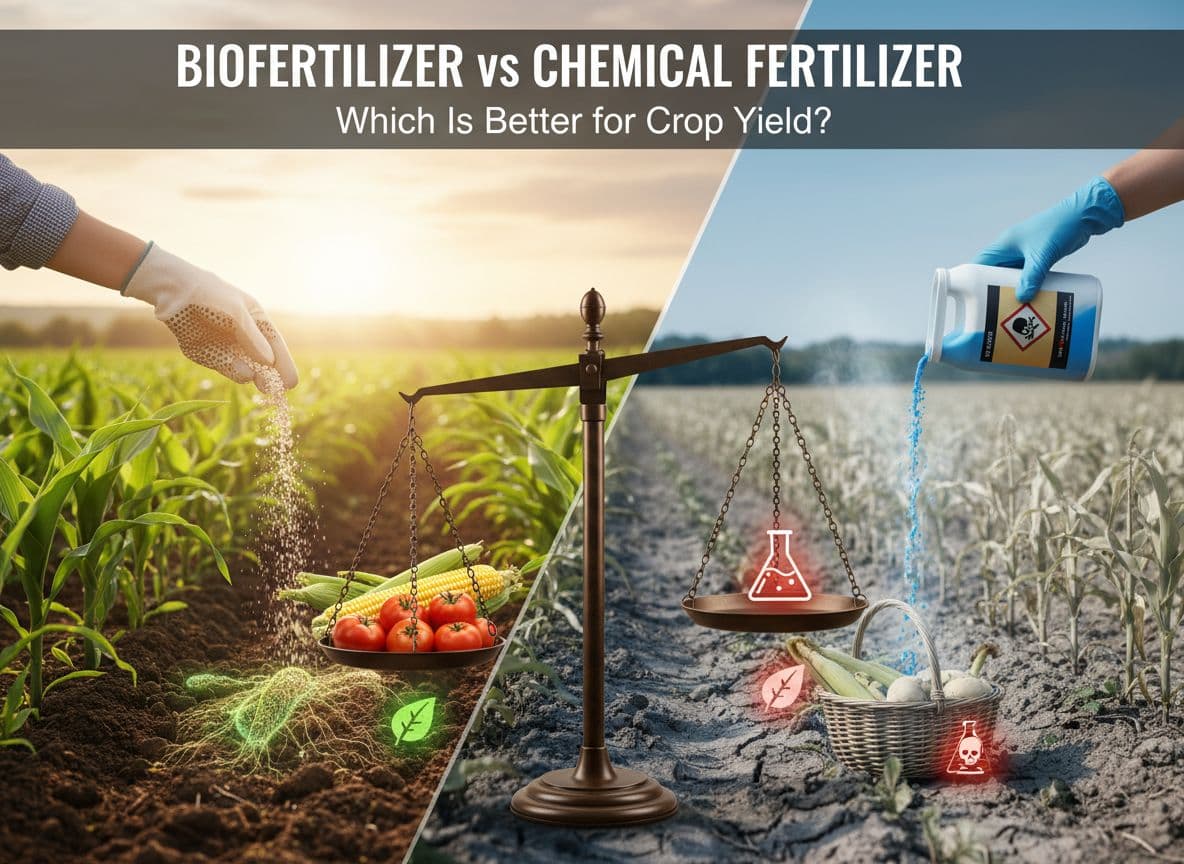
Biofertilizer vs Chemical Fertilizer: Which Is Better for Crop Yield?

23 February 2026
Table of Contents
ToggleIntroduction
Farmers use fertilizers to help crops grow well. Plants need nutrients from the soil. Sometimes the soil does not have enough. So farmers add fertilizers.
Today there is a big talk about biofertilizer vs chemical fertilizer. Many farmers want better yield. They also want healthy soil. Some people focus on quick crop growth. Others think about long-term farming.
This blog explains both options. It shows how they work. It also explains the difference between chemical fertilizers and biofertilizers. You will learn their pros and cons. You will also see which one may give the best fertilizer for crop yield in different situations.
What Are Biofertilizers?
Many people ask what is bio fertilizer. Biofertilizers are natural products. They contain living microorganisms. These include bacteria, fungi, and algae.
These microbes live in the soil. They help plants get nutrients. This explains how biofertilizers work.
Some microbes fix nitrogen from the air. Some dissolve phosphorus in the soil. Others improve root growth. This process supports plant health.
Common examples of biofertilizers include:
- Rhizobium
- Azotobacter
- Blue green algae
- Mycorrhiza fungi
These are often used as best biofertilizers for crops in organic farming.
Many farmers see strong benefits of biofertilizers for crops. They improve soil life. They also support natural farming systems.
Read more : Advantages and Disadvantages of Different Types of Biofertilizers
What Are Chemical Fertilisers?
Now let us understand what is chemical fertilizer. Chemical fertilizers are man-made products. They supply nutrients directly to plants.
Most of them contain NPK. This means nitrogen, phosphorus, and potassium. Some common types are:
- Urea
- Ammonium nitrate
- Super phosphate
Farmers use them because they act fast. Crops absorb nutrients quickly. This is how chemical fertilizers affect cropsin a short time.
Modern farming uses them widely. They help farmers grow crops faster. They also support large-scale farming.
Still, many people study the difference between fertilizer and biofertilizer before choosing one.
Biofertilizers vs Chemical Fertilizers: Side-by-Side Comparison
Nutrient Availability and Crop Yield
- Chemical fertilizers release nutrients fast. Plants absorb them quickly. Farmers often see quick growth.
- Biofertilizers work slowly. Microbes need time to act. They improve nutrient supply step by step.
- In the short term, chemical fertilizers may give higher yield. In the long term, biofertilizers help stable production.
- This is a key point in the difference between fertilizers and biofertilizers.
Soil Health
- Biofertilizers improve soil health. They increase microbial life. They also improve soil structure.
- Soil becomes rich in organic matter. Roots grow better in such soil.
- Chemical fertilizers can harm soil over time. Soil may lose natural microbes. It may also become hard.
- This shows the advantages of biofertilizers over chemical fertilizers.
Environmental Impact
- Biofertilizers are eco-friendly. They reduce pollution. They do not cause toxic runoff.
- Chemical fertilizers may cause water pollution. Rain can wash nutrients into rivers. This affects aquatic life.
- These effects show the disadvantages of chemical fertilizers.
- Farmers now care more about safe farming.
Cost and Practicality
- Biofertilizers often cost less in the long run. They improve soil naturally. Farmers may use fewer inputs later.
- Chemical fertilizers are easy to apply. They also show fast results.
- So farmers must balance cost and time.
Advantages and Disadvantages
Advantages of Biofertilizers
- There are many advantages and disadvantages of biofertilizers, but the benefits are clear.
- Biofertilizers support soil health. They improve nutrient cycling. They also reduce chemical use.
- They help organic farming systems. Many farmers like them for sustainable agriculture.
- These points show the advantages of biofertilizers over chemical fertilizers.
Disadvantages of Biofertilizers
- Biofertilizers work slowly. Farmers must wait for results.
- They also depend on soil condition. Temperature and moisture matter a lot.
- Sometimes farmers need training to use them well.
- These are part of the advantages and disadvantages of biofertilizers.
Advantages of Chemical Fertilisers
- Chemical fertilizers act fast. Crops respond quickly.
- They are easy to store and apply. Farmers can use them on large farms.
- This is why many farmers still rely on them.
Disadvantages of Chemical Fertilisers
- There are clear disadvantages of chemical fertilizers.
- Long use can reduce soil fertility. Soil microbes may decrease. Soil structure may also weaken.
- Too much use can harm water and the environment.
- Farmers now look at better options.
Impact on Crop Yield
- Both fertilizers affect yield in different ways.
- Chemical fertilizers increase yield quickly. This helps in high demand seasons.
- Biofertilizers improve soil over time. Healthy soil supports steady crop growth.
- Many studies show better long-term yield with biofertilizers. Crops also become more resilient.
- This is why farmers compare biofertilizer vs chemical fertilizer before planning crops.
- Choosing the best fertilizer for crop yield depends on soil condition and crop type.
Read more : Harnessing the Power of Bio Enzymes: Uses, Benefits, and Applications
Integrated Fertilization Approach
- Many experts now suggest a mix of both. Farmers use biofertilizers with small amounts of chemical fertilizers.
- This method improves yield and soil health.
- It also reduces environmental damage.
- Farmers start with soil testing. Then they add the right nutrients. Over time they reduce chemical use.
- This balanced method supports sustainable farming.
Conclusion
Fertilizers play a big role in agriculture. Farmers must choose wisely. Biofertilizers improve soil and protect nature. Chemical fertilizers give fast results. The difference between chemical fertilizers and biofertilizers is clear in how they work and how they affect soil. Many farmers now combine both methods. This helps them get good yield and healthy soil. In the end, the right choice depends on crop goals, soil health, and farming style.
FAQs
Are biofertilizers better than chemical fertilizers?
Biofertilizers are better for long-term soil health. Chemical fertilizers give faster results.
Can biofertilizers replace chemical fertilizers completely?
In some cases yes. But many farmers still use a mix for better yield.
How long before biofertilizers show results?
Biofertilizers usually take a few weeks to show clear effects. It depends on soil and climate.
Share


