
Protease Enzyme: Uses, Types, Production & Industrial Applications
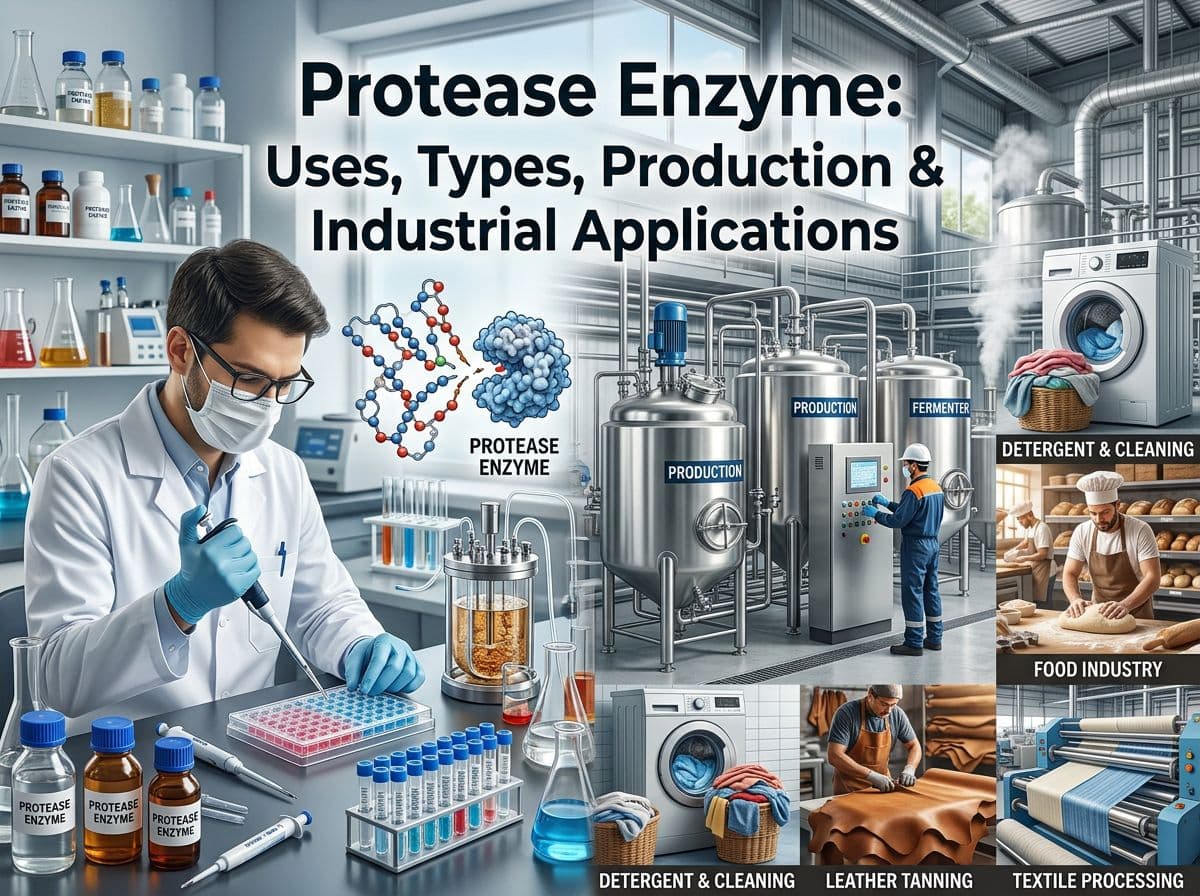
Did you know that protease enzymes make up about 60% of all industrial enzyme sales worldwide? It is a staggering number. These biological catalysts are essentially the heavy lifters of the molecular world. Their main job is to break the peptide bonds that hold proteins together. Without them, we wouldn’t have effective laundry detergents, tender steaks, or high-quality leather goods.
The role of protease enzyme activity is found everywhere, from the way your body digests lunch to the way a factory cleans industrial waste. In this guide, we will break down the types, structure, production methods, and real-world uses of these vital proteins.
What Is Protease Enzyme? Structure & Function
Let’s keep it simple. A protease enzyme (which you might hear scientists call a peptidase or a proteolytic enzyme) is a protein that triggers a process called hydrolysis. Essentially, it uses water to snap the bonds in a protein chain. Think of the protease enzyme function as a set of highly specific molecular scissors. These scissors don’t just cut anything; they are designed to snip long protein strands into tiny peptides and individual amino acids.
When we look at the protease enzyme structure, the “active site” is the star of the show. This is a tiny pocket on the enzyme’s surface where the chemical reaction actually happens. The shape of this pocket is incredibly precise. It only fits certain protein molecules, much like a specific key fits a specific lock. This precision is exactly why the role of protease enzyme is so crucial in nature and industry alike.
Types of Protease Enzyme
Not all proteins are built the same way, so we need different types of protease enzyme to handle them. We usually categorize them based on the specific “tool” they use at their active site to do the cutting.
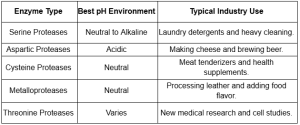
You can also classify them by where they cut. Endopeptidases jump into the middle of a protein chain and start hacking away. Exopeptidases, on the other hand, are more methodical; they nibble away at the very ends of the chain, one amino acid at a time.
Protease Enzyme Production
How do we get enough of these enzymes to supply the whole world? We turn to microbes. While plants like papaya have proteases, protease enzyme production on a massive scale relies on bacteria and fungi. They are basically tiny, efficient factories.
Common “workers” include Bacillus subtilis for alkaline enzymes and Aspergillus niger for acidic ones. There are two main ways we grow them:
- Submerged Fermentation (SmF): This is the industry standard. The microbes live in a giant tank of liquid broth. It is easy to monitor the “vibe” of the tank—things like oxygen and temperature.
- Solid-State Fermentation (SSF): Here, microbes grow on damp solids like wheat bran. It is a bit more old-school but very cheap and uses far less water.
After the microbes do their work, the liquid is filtered and purified. Usually, it ends up as a powder after being spray-dried. Modern science is even using gene-editing tools to make these enzymes tougher so they don’t break down in hot water or harsh chemicals.
Read More : How Do Protease Enzyme Supplements Aid In The Body’s Immune Response?
Protease Enzyme Uses & Industrial Applications
The list of protease enzyme uses is honestly massive. If a product involves protein, a protease was likely involved at some point.
The Detergent Industry
This is the big one. Most laundry pods contain alkaline serine proteases. Why? Because mud, blood, and grass stains are mostly protein. These enzymes literally eat the stain off your shirt. They are designed to work in the high-pH environment of your wash water, even if you’re using a cold-water cycle to save on the electric bill.
Food and Beverage
Proteases are a chef’s secret weapon. In the dairy industry, they help turn milk into cheese by curdling the proteins. Bakers use them to relax dough so it doesn’t snap back when being shaped. If you’ve ever used a meat tenderizer, you’re likely using plant-based proteases like papain to soften tough muscle fibers.
Leather Processing
In the past, tanning leather involved some really nasty chemicals. Now, the protease enzyme benefits the environment by taking over. They are used to remove hair from hides and soften the skin. It makes the whole process much cleaner and safer for the workers.
Pharma and Medicine
Doctors use these enzymes to treat heavy burns by cleaning away dead skin—a process called debridement. They are also found in supplements for people who have trouble digesting protein. Some specific proteases even help break up blood clots.
Animal Feed
Farmers add these enzymes to animal feed to help cows and chickens get more protein out of cheaper grains. It’s better for the animal’s health and better for the farmer’s wallet.
Cleaning Up the Planet
Tanneries and food plants produce a lot of messy, protein-rich wastewater. Instead of using harsh acids to clean it, we use proteases. They digest the waste naturally. As noted in Frontiers in Microbiology (2023), this shift is a major part of making global industry “greener.”
Read More : Application of Protease Enzymes in Food and Feed Industry
Frequently Asked Questions (FAQ)
What is the main function of protease enzyme?
The protease enzyme function is to break down proteins into smaller bits. It uses water to snap the peptide bonds, turning big protein chains into peptides and amino acids.
What are the types of protease enzyme?
The big five are serine, aspartic, cysteine, metallo, and threonine. They are named after whatever helps them do the cutting at their active site.
Where is protease enzyme produced industrially?
Mostly in big fermentation tanks using bacteria (like Bacillus) or fungi (like Aspergillus). It’s a very controlled biological process.
Why do we put protease in laundry soap?
Because things like blood, sweat, and egg are “sticky” proteins. Soap alone can’t always lift them, but a protease digests them so they wash away easily.
Conclusion
It is hard to overstate the role of protease enzyme technology in our daily lives. These molecules help us clean our clothes, produce our food, and even heal our wounds. The protease enzyme benefits go beyond just efficiency; they are helping industries move toward a more sustainable, chemical-free future.
As a leading industrial protease enzyme supplier, we focus on getting these biological tools exactly right for your specific needs. Whether you’re making soap or snacks, we have the technical edge to help. Explore our range of high-performance protease enzymes for industrial applications or reach out to Ultreze Enzymes for a bulk quote.
Share


