
What Is Malt? A Clear Guide to Malt and Malt Processing
12 February 2026
- Malt is cereal grains (most often malted barley) that’s been germinated, then dried, so its starch can be turned into fermentable sugars.
- Malting has three stages, steeping, germination, and kilning.
- Enzymes (mainly amylases and proteases) drive conversion and readiness for mashing.
- You use malt in brewing, distilling, and food production like cereals, baking, and malted milk.
Table of Contents
ToggleWhat is malt, and why do you see it in beer, whiskey, and even cereal?
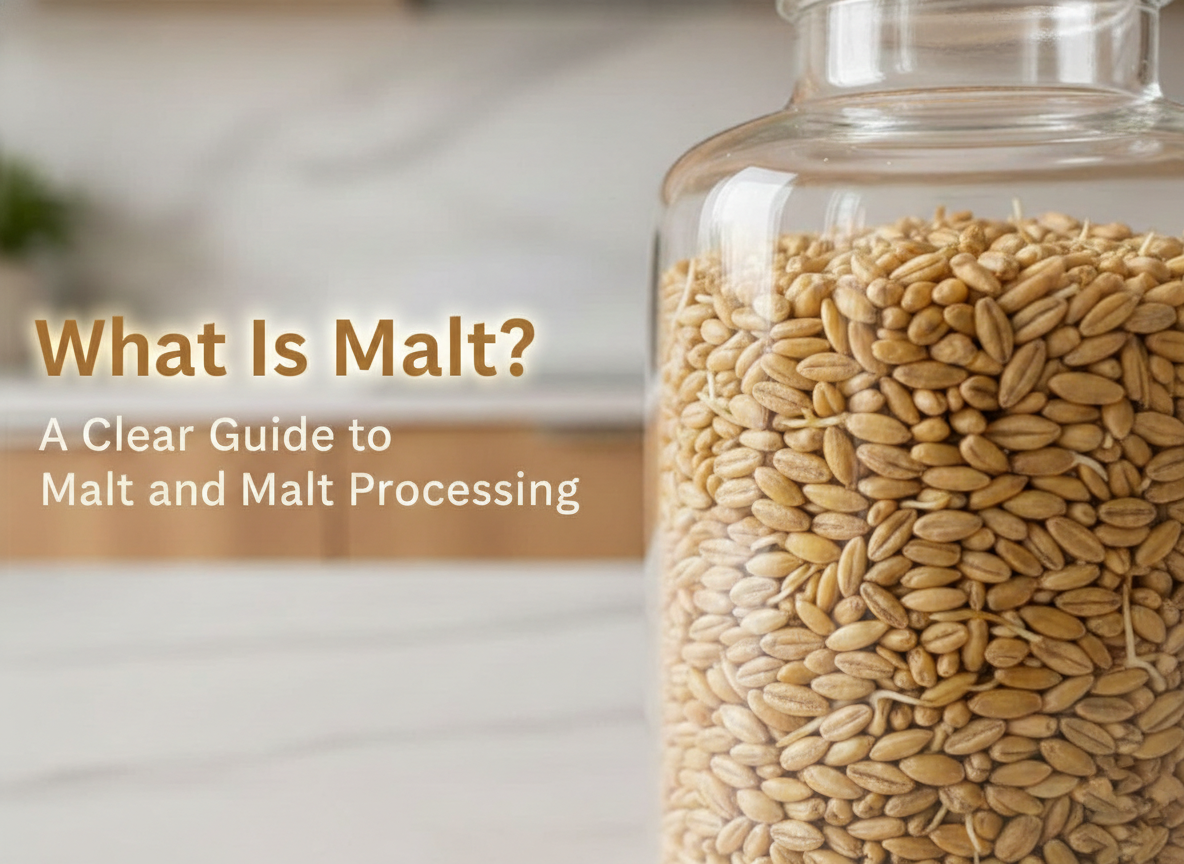
What is malt? It’s grain, usually malted barley, that has been soaked to start sprouting and then dried to stop growth. That controlled sprout builds the enzymes you need to turn grain starch into fermentable sugars.
You notice malt in places you already know: the bready base of beer, the honeyed notes in many whiskeys, the familiar flavor in malted milk, and the “malt” taste in some breakfast cereals. That last one often points to a simple idea of malted cereals meaning cereals that include malted grain or malt extract for flavor, color, and sometimes processing help.
Malting matters for three reasons. It creates enzymes that help break starches into sugars, it boosts sugar yield in the mash, and it adds flavor and color that raw grain can’t provide on its own. Up next, you’ll get a practical view of malt types (including what is malted barley), then a clear walk-through of the three-stage malting process.
Key takeaways: Malt is processed grain, not a new ingredient. You malt to build enzymes, improve sugar conversion, and shape flavor and color.
Understanding malt: what it is made from, what it does, and the main types you will run into
Malt isn’t a separate plant. It’s the same grain, changed on purpose. Inside each kernel, malting starts loosening the tight “packaging” of starch and protein while developing enzymes, so your mash can access it. Industry experts often describe this as getting the grain ready to “open up” at the right time, not too early, not too late.
Barley leads the category, but you can malt wheat, rye, and oats, and some producers malt other grains for specific goals. You’ll also hear malt grouped by function:
- Base malts: These give most of the fermentable sugars and most of the enzyme strength.
- Specialty malts: These focus on color and flavor (caramel, toast, chocolate, roast), and they usually contribute less enzyme power.
Where you’ll run into malt most often:
- Brewing and distilling (beer, whiskey, malt beverages)
- Baking and cereal (flavor, browning, texture)
- Sweeteners and ingredients (malt extract, syrups, flavor bases)
Scientific research shows the big win of malting is enzymatic readiness. The American Society of Brewing Chemists (ASBC) and brewing training bodies like the Institute of Brewing and Distilling (IBD) emphasize that enzyme development and controlled drying are central to consistent wort production and fermentation results.
What is malted barley, and why is barley the go-to grain?
When you compare raw barley to malted barley, the difference is like comparing dry beans to cooked beans. The raw grain is intact and stubborn. The malted barley has been prepared so hot water in the mash can access starch and activate enzymes.
Barley works well because the husk protects the kernel during handling and malting, and it helps later in lautering by forming a natural filter bed to separate the wort. Barley also tends to bring strong enzyme potential, which matters when you want reliable conversion in a brewhouse or distillery.
If you’re buying malt, a few simple quality signs help:
- Clean grain with low debris
- Even kernel size for predictable water uptake
- A strong germination rate, so the batch modifies evenly
That’s why “what is malted barley” is often shorthand for “the most dependable malt for beer and whiskey.”
What is malt and what is its purpose, beyond “adding sweetness”?
Malt can taste sweet, but sweetness is the side effect, not the job. The core purpose is conversion and control.
First, malting develops and activates enzyme systems that matter later in mashing:
- Alpha amylase and other amylases help break starch into sugars (including maltose).
- Proteases break proteins into smaller pieces, supporting yeast nutrition and affecting foam and clarity.
- Cell wall breakdown reduces “gummy” texture in the mash.
Second, malt shapes flavor and color. A pale base malt keeps enzyme strength high for fermentation power. A darker specialty malt adds toast, caramel, or roast character, but it may contribute little enzyme activity.
Malt also carries nutrients (some B vitamins and minerals), but it’s best to treat that as a background detail. In production, you care more about extract, fermentability, and sensory outcomes than nutrition claims.
Malt processing (the malting process) explained
What is malting? It’s controlled sprouting followed by controlled drying. You’re guiding the grain to build enzymes and soften its internal structure, then stopping growth at the right point. Most malt houses run the full malting process in about 6 to 10 days, with tight control of water, airflow, and temperature to keep batches consistent.
Think of it like waking the grain up, letting it do some “prep work,” then putting it back to sleep, on schedule.
Stage 1: Steeping (soaking) wakes the grain up
Steeping starts with cleaning, then soaking the grain in water in cycles. During steeping, maltsters alternate water rests and air rests so the grain can breathe. Oxygen matters, because the grain is a living seed and it needs air as it restarts metabolism.
A common target is raising moisture content from roughly 12% at storage to about 40% to 46%. Many operations steep for about 24 to 72 hours, depending on barley variety, kernel size, and plant setup.
Early visual signs show up fast. You’ll see “chits,” the first rootlet tips, which tell you the grain is awake and ready for germination.
Stage 2: Germination turns on enzymes and starts “modification”
After steeping, the grain undergoes germination for about 4 to 6 days in a cool, humid space. During germination, enzyme activity ramps up and the kernel begins modification, meaning the inside of the grain loosens so starch and protein are easier to use later. The acrospire, the shoot emerging under the husk, serves as a technical sign of healthy growth alongside rootlet development.
Key enzyme groups and what they do:
- Alpha amylase and beta amylase: Break starch into sugars, including fermentable sugars like maltose.
- Proteases: Break proteins into smaller fractions that affect yeast nutrition, clarity, and foam.
- Cell wall breakdown (often discussed in brewing texts) reduces viscosity and helps wort flow.
Control is practical and hands-on. The grain bed is turned to prevent clumping, manage heat buildup, and keep oxygen moving. Humidity and airflow stay steady so kernels modify evenly instead of racing ahead or stalling. This ensures consistent modification by the end of germination.
Stage 3: Kilning dries the “green malt” and sets flavor and color
By the end of germination you have green malt, which is wet and still growing. Kilning stops germination and dries the malt down to about 3% to 5% moisture for storage stability.
Many kilns start cooler and then ramp heat. A common range for many malt styles is about 50°C to 85°C (styles vary). Heat also drives browning reactions that build malt aroma and color. Raise kiln heat enough and you’ll deepen flavor, but you can also reduce enzyme strength, which matters if you need high conversion power.
After kilning, the malt is cooled and rootlets are removed. Then it’s ready for milling and mashing.
How malt processing connects to brewing, quality specs, and enzyme performance
In the plant, malt processing decisions show up later as brewhouse numbers and sensory results. You feel it in extract yield and sparging performance, run-off speed, fermentability, and batch-to-batch repeatability. That’s why many teams tie malt house specs directly to mashing targets.
Malting process in the brewing industry:
The malting process in the brewing industry is simple: malt is produced to give you reliable extract and reliable enzyme activity in the brewhouse. You want the same mashing behavior even when grain lots change.
A few specs often sit at the center of QA conversations:
- Diastatic power: A practical measure of enzyme strength for starch conversion.
- Extract potential: How much soluble material you can pull into wort.
- Protein level: Too high can raise haze risk, too low can thin the body, targets depend on style and process.
- Consistency: Predictable modification so your mill gap and mash profile don’t need constant rescue moves.
Base malts do most of the conversion work and serve as the foundation for ingredients like malt syrup. Specialty malts are there for flavor and color, and they typically rely on base malts for enzymatic support.
Why enzymes matter from malt house to mash tun, and how modern plants improve consistency
In mashing, enzymes convert starch into fermentable sugars. That directly affects yield, fermentability, and final balance. If conversion drags, you can lose extract, extend brewhouse time, and create variability that shows up in fermentation.
You can improve consistency with strong process control (malt specs, mill settings, mash pH, temperature rests), and in some cases, with targeted enzyme support when grain quality varies or when you run high adjunct loads. Established manufacturers like Ultrez offer brewing-focused enzyme options such as amylase, protease, and beta-glucanase, which can help address slow conversion, viscosity, haze, or yield constraints.
If you’re troubleshooting conversion or yield, learn more about enzyme solutions designed for malt and brewing, including options from Ultrez.
Frequently asked questions about malt and malting
What is the difference between malt and barley?
Barley is the raw grain. Malted barley is barley that’s been soaked, sprouted, and dried. That process builds active enzymes and makes starch easier to convert into sugars during mashing.
How long does the malting process take?
The malting process at most malt houses involves steeping for 1 to 3 days, germination for 4 to 6 days, and kilning for 1 to 2 days. Total time is often about 6 to 10 days, depending on malt style and plant conditions.
Can grains other than barley be malted?
Yes. Wheat, rye, oats, and other grains can be malted. Barley stays most common because its husk helps processing and it tends to bring strong enzymes for converting starch during mashing, while other malts are used for flavor or gluten-free goals.
Conclusion
Now you can answer “what is malt” in one line: it’s germinated, dried grain with activated enzymes, ready to help turn starch into sugars. You’ve also got the big picture of the malting process, steeping to wake the seed, germination to build enzymes and modification, and kilning to dry and set flavor and color. Those steps show up later as extract, fermentability from enzymes converting starch to fermentable sugars, and flavor in beer, whiskey (distilling), and food.
If you want help improving conversion, clarity, or yield, contact your technical team or Ultrez about enzyme solutions, or request a technical guide you can share with production and QA.
Share


