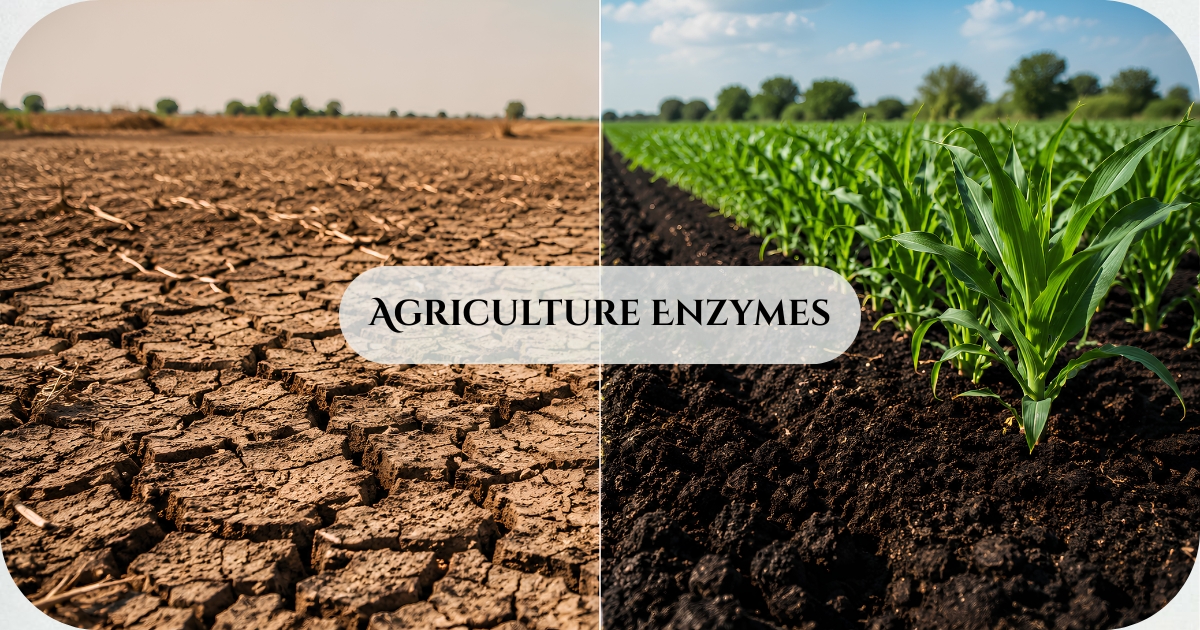
10 Powerful Benefits of Agriculture Enzymes Every Farmer Should Know
Introduction
Every year, Indian farmers spend an estimated lakhs of rupees per acre on fertilizers, pesticides, and soil amendments — yet nearly 30% of that investment goes to waste because the soil simply isn’t equipped to absorb and use those nutrients efficiently. If you’re a farmer, Agri-input dealer, or agronomist, this number should stop you in your tracks. It means that for every three bags of fertilizer you buy, one is essentially money thrown into soil that can’t process it properly. So, the real question isn’t “how much more should I spend on fertilizer this season?” — it’s “why isn’t my soil using what I’m already giving it?”
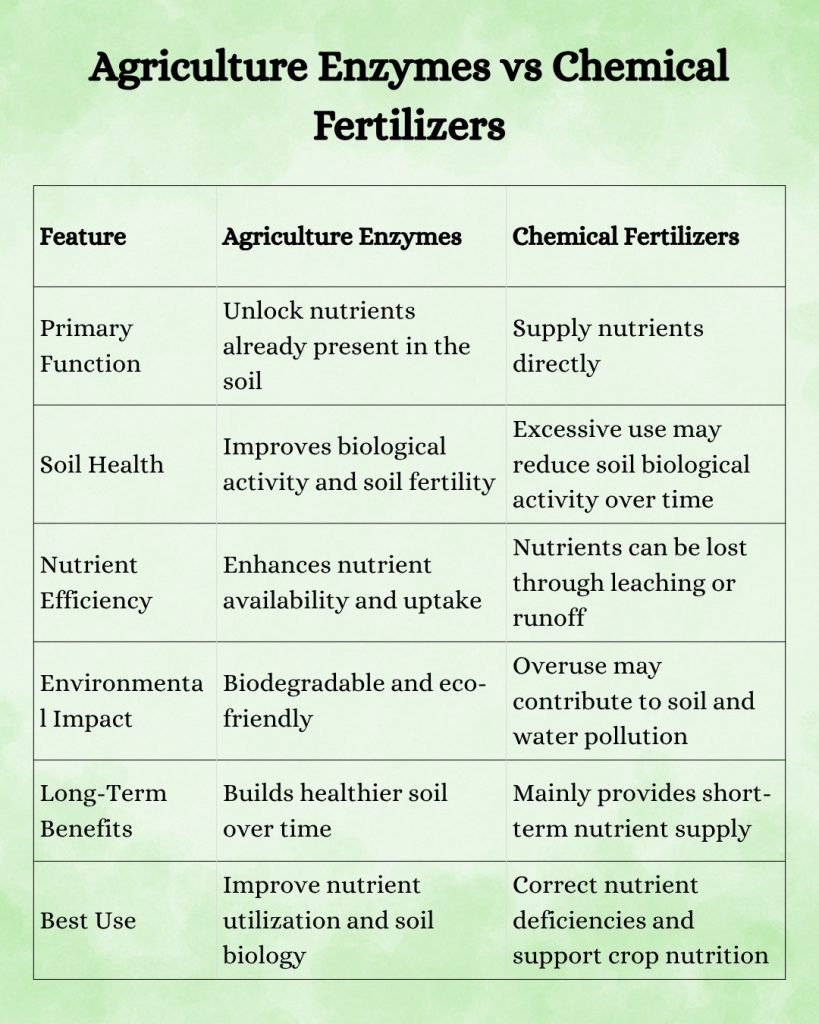
The answer lies in biology, not chemistry. Your soil is home to billions of microorganisms, but without the right enzyme activity, many of the nutrients already present remain locked, unavailable, and essentially useless to your plants. This is exactly where agriculture enzymes step in. Unlike fertilizers that add more nutrients, enzymes unlock the nutrients already there, dramatically improving efficiency, reducing waste, and — most importantly — improving your bottom line.
This guide breaks down the 10 most important, research-backed benefits of using agriculture enzymes on your farm, explains exactly how they work, and shows you what to look for when choosing a quality enzyme product. We’ll also highlight how manufacturers like Ultreze Enzymes are supplying farmers with reliable, scientifically formulated enzyme solutions built for Indian agricultural conditions. Whether you manage two acres or two hundred, understanding this technology could change how you approach every future growing season. Keep reading — benefit No.8 is the one most farmer wish they’d known about years earlier.
What Are Agriculture Enzymes?
Agriculture enzymes are naturally occurring biological catalysts that accelerate essential biochemical reactions within the soil and plant environment. These specialized proteins are produced by beneficial microorganisms, fungi, plant roots, and certain natural biological processes.
Their primary function is to break down complex organic materials into simpler compounds that plants can readily absorb and utilize. Unlike fertilizers, which supply additional nutrients, agriculture enzymes increase the efficiency of nutrients already present in the soil by converting them into plant-available forms.
For example, valuable nutrients such as nitrogen, phosphorus, potassium, sulfur, and carbon may already exist within the soil but remain chemically bound or trapped inside organic matter. Agriculture enzymes help release these nutrients, making them accessible for healthy crop growth.
Because they work with nature rather than against it, agriculture enzymes are becoming an important component of sustainable agriculture, precision farming, organic farming, and regenerative soil management.
How Agriculture Enzymes Improve Plant Growth
The process can be understood in five simple steps:
Step 1: Organic Matter Enters the Soil
Crop residues, compost, manure, and plant materials accumulate in the soil.
⬇️
Step 2: Agriculture Enzymes Break Down Complex Materials
Enzymes rapidly decompose cellulose, proteins, starches, and other organic compounds into smaller molecules.
⬇️
Step 3: Nutrients Become Available
Nitrogen, phosphorus, potassium, and micronutrients are released into forms that plant roots can absorb.
⬇️
Step 4: Beneficial Microorganisms Become More Active
A healthier biological environment supports bacterial and fungal populations that further improve nutrient cycling.
⬇️
Step 5: Crops Grow Healthier
Plants develop stronger root systems, absorb nutrients more efficiently, tolerate stress better, and produce improved yields.
The Problem with Traditional Fertilizer-Only Farming
For decades, the standard approach to boosting yield was simple: apply more fertilizer. But this approach has diminishing returns. Over-reliance on chemical fertilizers without addressing soil biology leads to compacted soil, reduced microbial diversity, and nutrient lock-up — meaning farmers pay more each year for smaller gains.
Why Soil Biology Is the Missing Link
Healthy soil isn’t just dirt — it’s a living ecosystem. Enzymes act as the “workforce” that keeps this ecosystem functional, converting organic and mineral compounds into forms plants can actually absorb.
Types of Agriculture Enzymes
Different agriculture enzymes perform different biological functions inside the soil. Understanding these enzymes helps farmers choose products that best support their crops and soil conditions.
1. Cellulase
Crop residue management
Compost acceleration
Soil organic matter improvement
2. Protease
Improves nitrogen availability
Enhances microbial activity
Supports vigorous vegetative growth
3. Amylase
Supports microbial populations
Accelerates decomposition
Improves soil biological activity
4. Lipase
Speeds organic matter breakdown
Improves nutrient recycling
Enhances soil biological balance
5. Phytase
Improves phosphorus efficiency
Reduces phosphorus fertilizer dependency
Encourages stronger root development
6. Xylanase
Accelerates residue decomposition
Enhances nutrient cycling
Improves soil fertility over time
10 Benefits of Agriculture Enzymes (Backed by Farming Results)
Benefit 1: Unlocks Nutrients Already Present in Soil
Enzymes break the chemical bonds holding nutrients like phosphorus and nitrogen in unavailable forms, converting them into forms plants can absorb immediately — reducing fertilizer waste significantly.
Benefit 2: Boosts Microbial Population and Activity
A thriving population of beneficial soil microbes is essential for long-term fertility. Enzymes create ideal conditions for these microbes to multiply and function efficiently.
Quick Fact
A single gram of healthy, enzyme-active soil can contain billions of beneficial microorganisms working to support plant growth.
Benefit 3: Speeds Up Organic Matter Decomposition
Crop residue, manure, and compost break down significantly faster with enzyme activity, recycling nutrients back into the soil in weeks instead of months.
Benefit 4: Reduces Overall Fertilizer Requirement
Because enzymes improve nutrient use efficiency, farmers typically need less fertilizer to achieve the same or better results — a direct cost-saving benefit season after season.
Benefit 5: Strengthens Root Systems
Better nutrient availability supports deeper, denser root growth, giving plants a stronger foundation to access water and withstand environmental stress.
Benefit 6: Improves Soil Structure Over Time
Enzyme activity gradually improves soil aggregation, aeration, and drainage — turning compacted, tired soil into a looser, more workable growing medium.
Benefit 7: Increases Drought and Stress Tolerance
Enzyme-treated soils retain moisture more effectively, helping crops better withstand dry spells, heat stress, and irregular rainfall patterns.
Benefit 8: Improves Crop Yield and Uniformity
This is the benefit that convinces most farmers to switch. Enzyme-enhanced soil consistently produces more uniform crop growth, better grain/fruit fill, and measurably higher yields — a result many farmers using *Ultreze Enzymes* products report tracking closely across seasons.
Why Yield Consistency Matters
Uniform crop growth isn’t just about total output — it also means better grading, higher market prices, and less crop loss during harvest
Enzymes are naturally biodegradable and don’t leave harmful chemical residue in soil or water systems, aligning with sustainable and export-quality farming standards.
Benefit 10: Delivers Strong Long-Term Return on Investment
While chemical fertilizers offer short bursts of results, enzyme-based soil improvement compounds over time — meaning better soil, lower input costs, and stronger yields for years to come, not just one season.
Choosing the right enzyme partner is just as important as selecting the right agricultural input.
Ultreze Enzymes is a trusted manufacturer and supplier of agriculture enzymes, dedicated to delivering high-quality enzyme solutions for modern farming. With expertise in enzyme technology and a commitment to innovation, the company develops formulations designed to support nutrient efficiency, improve soil biology, and promote sustainable agricultural practices.
Why Farmers and Businesses Choose Ultreze Enzymes
High-quality enzyme manufacturing standards
Advanced research and development
Reliable enzyme formulations
Consistent product quality
Technical guidance for agricultural applications
Commitment to sustainable farming solutions
Whether you are an agri-input company, distributor, or farmer looking for dependable enzyme products, Ultreze Enzymes aims to provide solutions that support healthier soils and improved crop productivity.
Frequently Asked Questions (FAQs)
1. What are agriculture enzymes?
Agriculture enzymes are natural biological catalysts that accelerate soil biochemical reactions, helping release nutrients, improve microbial activity, and enhance nutrient availability for plants.
2. How do agriculture enzymes improve soil health?
They stimulate beneficial microorganisms, accelerate organic matter decomposition, improve nutrient cycling, and support better soil structure, resulting in healthier and more productive soils.
3. Can agriculture enzymes replace fertilizers?
No. Agriculture enzymes are not fertilizers. They improve the efficiency of existing and applied nutrients, making fertilizers more effective rather than replacing them.
4. Which crops benefit from agriculture enzymes?
Agriculture enzymes can be used in a wide range of crops, including cereals, rice, wheat, maize, cotton, sugarcane, vegetables, fruits, pulses, spices, and plantation crops.
5. Are agriculture enzymes suitable for organic farming?
Many enzyme-based agricultural products are compatible with sustainable and organic farming systems. Always verify product specifications and local certification requirements before use.
Conclusion
Modern farming is no longer just about applying more fertilizers—it is about using every nutrient more efficiently while protecting soil health for future generations.
Agriculture enzymes have emerged as a valuable biological solution that supports nutrient availability, stimulates beneficial microbial activity, accelerates organic matter decomposition, improves fertilizer efficiency, strengthens root systems, and promotes sustainable crop production. By working with natural soil processes, they help farmers achieve healthier crops while building long-term soil fertility.
As agriculture continues to evolve, integrating agriculture enzymes into crop nutrition programs can improve productivity, reduce input losses, and support environmentally responsible farming practices.
If you are looking for a trusted manufacturer and supplier of agriculture enzymes, Ultreze Enzymes offers scientifically developed enzyme solutions designed to help farmers, agri-input companies, and distributors improve soil performance and crop productivity through reliable enzyme technology.
Ready to Improve Your Soil Naturally?
Explore high-quality agriculture enzyme solutions from Ultreze Enzymes and discover how enzyme technology can help you build healthier soil, stronger crops, and a more sustainable future for farming.