
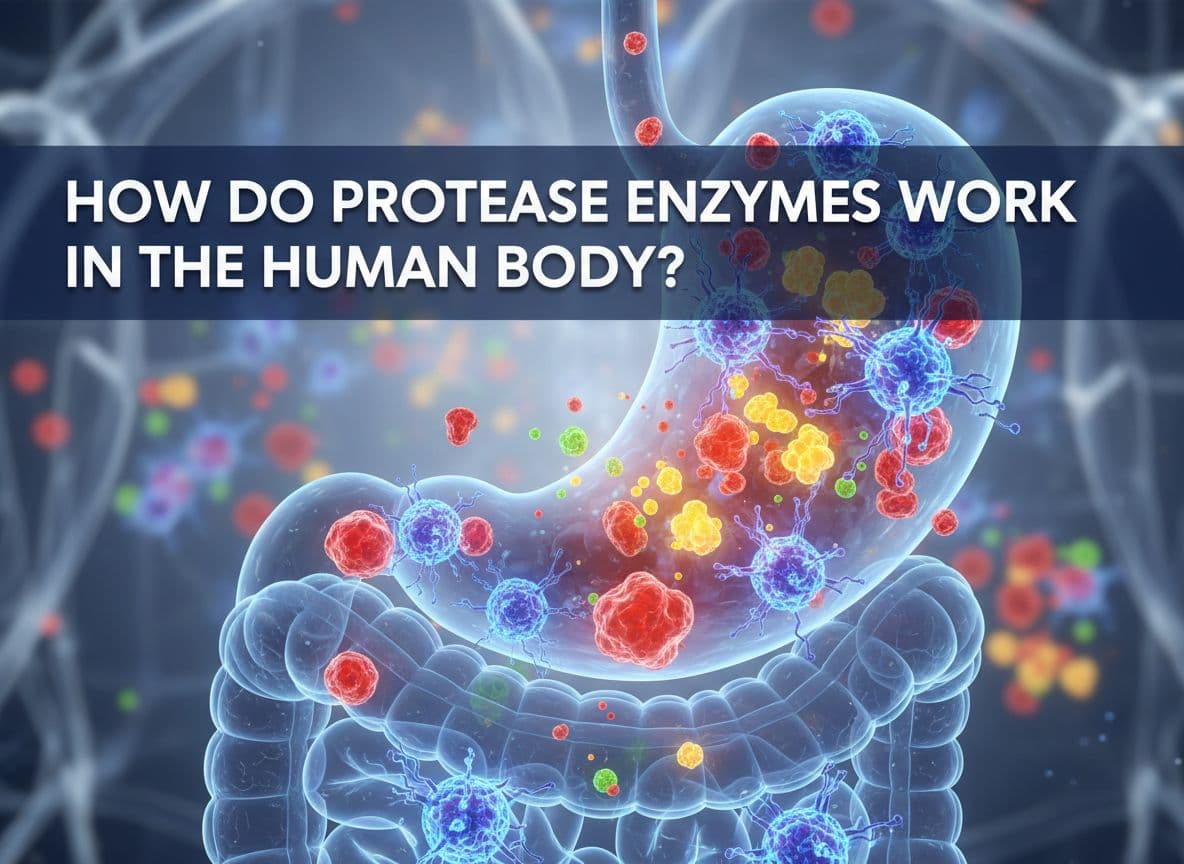
How Do Protease Enzymes Work in the Human Body?
21 April 2023
A protease enzyme helps the body turn protein from food into usable building blocks. Without it, protein from meat, eggs, dairy, beans, and nuts would be too large to absorb well.
This matters because proteins support muscle repair, hormones, immune cells, and daily energy use. Protease enzymes break proteins into amino acids, they are produced in the stomach, pancreas, and small intestine, and they support digestion, nutrient absorption, and gut health.
Table of Contents
ToggleWhat Are Protease Enzymes?
Protease enzymes, also called proteolytic enzymes, are enzymes that break down protein. They cut long protein chains into smaller peptides and amino acids, which the body can absorb through the small intestine.
These enzymes do more than help with meals. They also help remove old proteins, support cell signaling, and take part in immune and repair processes.
Where Are Protease Enzymes Produced?
When people ask, “where are protease enzymes produced,” the short answer is the stomach, pancreas, and small intestine. Each area handles a different stage of protein digestion.
The main sites are listed below.
Organ | Protease Enzyme Produced | Main Function |
Stomach | Pepsin | Starts protein digestion |
Pancreas | Trypsin, Chymotrypsin | Continues protein breakdown |
Small Intestine | Peptidases | Finishes digestion |
The body spreads this work across several organs because proteins are complex. One enzyme starts the job, while others finish it.
How Do Protease Enzymes Work?
The answer to “how do protease enzymes work” is simple at first, then more precise on a chemical level. The protease enzyme mechanism relies on hydrolysis, which means the enzyme uses water to cut peptide bonds inside proteins.
The process follows a clear sequence:
- A person eats protein-rich food.
- Stomach acid unfolds the protein structure.
- Pepsin starts cutting the protein into smaller pieces.
- The pancreas releases more protein digesting enzymes, mainly trypsin and chymotrypsin.
- The small intestine finishes the job and absorbs amino acids into the bloodstream.
Some enzymes cut within the protein chain, while others trim from the ends. Together, these enzymes that break down protein make absorption possible.
Protease Enzyme Function in Digestion
The main protease enzyme function is protein digestion, but the effects go far beyond the gut. Once the body absorbs amino acids, it can use them to build muscle tissue, enzymes, hormones, and antibodies.
That is why protease in digestion matters so much. Good protein breakdown supports tissue growth, exercise recovery, immune defense, and normal repair after stress or illness. Poor breakdown can leave useful nutrients locked inside food.
Types of Protease Enzymes
There are several protease enzyme types, and they work best in different places and conditions. Scientists group proteases into six major classes, based on how they cut peptide bonds. In digestion, a few key types do most of the work.
Pepsin
Pepsin is made in the stomach and works in acidic conditions. It starts protein digestion soon after food reaches the stomach.
Trypsin
The pancreas produces trypsin in an inactive form, then the small intestine activates it. It keeps protein breakdown going after food leaves the stomach.
Chymotrypsin
Chymotrypsin also comes from the pancreas. It helps break larger, more complex protein fragments into smaller peptides.
Bromelain and Papain
Bromelain comes from pineapple, and papain comes from papaya. These plant-based proteolytic enzymes can support protein digestion and are often used in supplements.
Protease Enzyme Benefits
The main protease enzyme benefits show up in digestion, absorption, and recovery. When protein breaks down well, the body gets more value from food.
- It improves digestion of protein-rich meals.
- It helps the body absorb amino acids more efficiently.
- It supports muscle repair and post-workout recovery.
- It may reduce bloating, gas, and digestive discomfort.
- It can support gut health, especially when digestion feels heavy.
- Some supplemental proteases, such as bromelain, may also help with inflammation.
For people with weak protein digestion, these benefits can be noticeable after meals.
What Happens If the Body Lacks Protease Enzymes?
Low protease activity can lead to incomplete protein digestion. As a result, some people may feel bloating, gas, indigestion, or heaviness after eating protein-rich foods.
Over time, poor protein breakdown may also affect nutrient status. In more serious cases, it can contribute to protein deficiency, weak muscles, slow recovery, or gut irritation.
When to See a Doctor
A doctor should evaluate ongoing digestive pain, unexplained weight loss, greasy stools, chronic bloating, or signs of malnutrition. These symptoms can point to pancreatic problems or other digestive disorders.
Protease Enzymes in Industrial and Commercial Applications
Proteases matter outside the body too. The same basic ability to cut proteins makes them useful in pharmaceuticals, food processing, nutraceuticals, and protein supplements.
B2B buyers often look for an industrial enzyme solutions provider that can support formulation, quality, and scale. Search terms such as “buy industrial enzymes online,” “enzyme suppliers in India,” “best enzyme manufacturer,” and “bulk enzyme supply” reflect that demand. For manufacturers, protease selection depends on purity, activity, source, and intended use.
Key Takeaways
A protease enzyme is essential for breaking down protein into absorbable amino acids. These enzymes are produced mainly in the stomach, pancreas, and small intestine, and different protease enzyme types handle different stages of digestion. They help improve digestion, nutrient absorption, gut health, and product performance across many industries.
FAQ Section
What is a protease enzyme?
A protease enzyme is a digestive enzyme that breaks down proteins into amino acids.
Where are protease enzymes produced?
Protease enzymes are mainly produced in the stomach, pancreas, and small intestine.
What are the main benefits of protease enzymes?
They improve digestion, help absorb nutrients, support muscle repair, and promote gut health.
What foods contain natural protease enzymes?
Papaya contains papain, while pineapple contains bromelain.
Can protease enzymes be used in industry?
Yes. Protease enzymes are widely used in pharmaceutical, food, and nutraceutical industries.
A protease enzyme is one of the body’s key tools for turning food protein into something useful. When it works well, digestion is smoother, amino acid absorption improves, and the body has the raw material it needs to repair and function.
For companies that need high-quality enzyme support, expert sourcing matters. 👉 Contact Ultreze Enzymes today for customized enzyme solutions, bulk enzyme supply, and expert support from one of the trusted enzyme suppliers in India.
Share


