
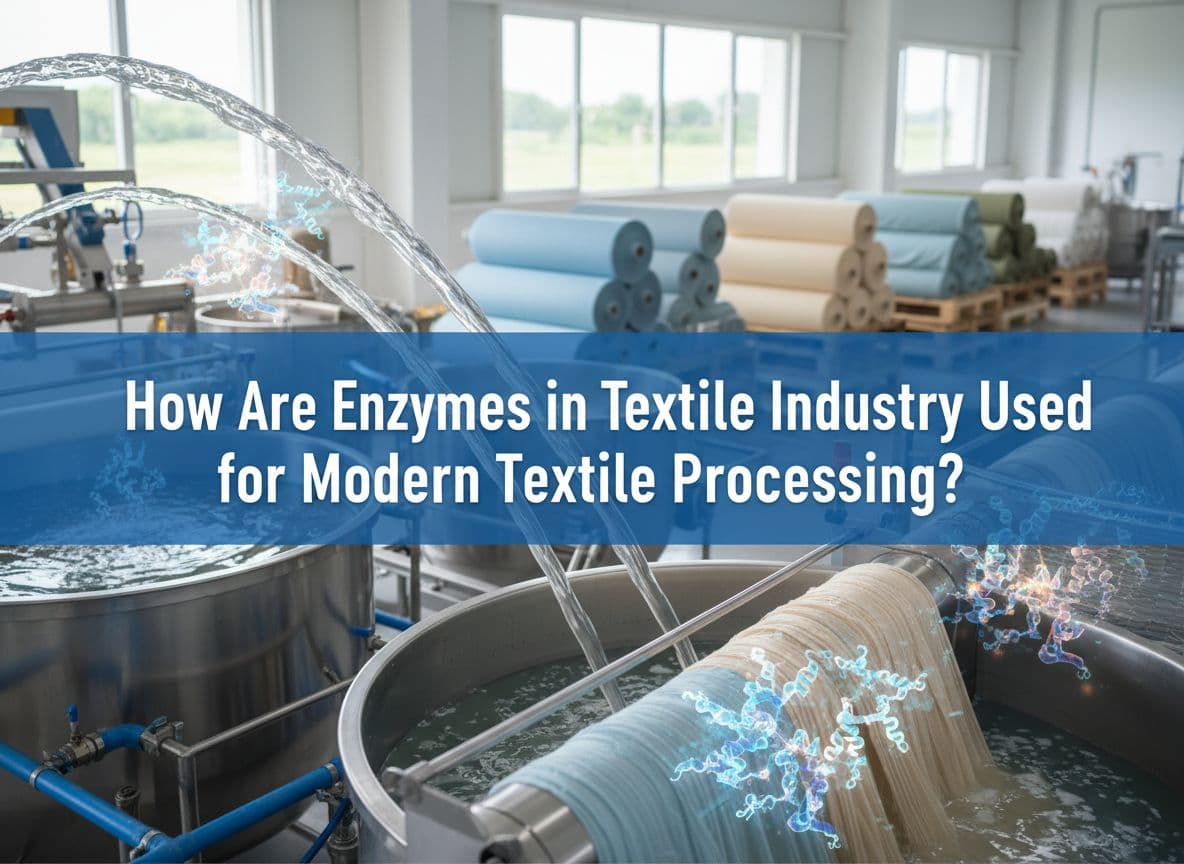
How Are Enzymes in Textile Industry Used for Modern Textile Processing?

13 February 2026
Table of Contents
ToggleKey takeaways on enzymes in textile industry
- Desizing: Amylase enzymes remove starch size fast and evenly, with fewer harsh chemicals.
- Bio-scouring: Pectinase and lipase help remove pectins, waxes, and oils to improve absorbency.
- Bleach cleanup: Catalase removes leftover peroxide before dyeing, which reduces shade problems.
- Bio-polishing: Cellulase reduces fuzz and pilling, so fabric feels smoother.
- Denim finishing: Cellulase enzyme wash can reduce heavy use of pumice stones.
- Why mills switch: Enzymes can cut water and energy use, improve fabric feel, and lower handling risk.
Wet processing teams deal with high wastewater loads, rework from uneven preparation, and rising steam costs. That pressure is pushing more mills to use enzymes in textile industry processes. Many steps can run at lower temperatures with enzymes. In some setups, mills report 30% to 40% energy savings when low-temperature recipes replace hot ones.
In most plants, enzymes in textile industry lines support desizing, scouring, finishing, and peroxide removal before dyeing. This post explains what enzymes are, which types matter most, where they fit in production, and how to evaluate a supplier before a trial.
What are textile enzymes, and why do they work?
Textile enzymes are biocatalysts. They are proteins that speed up reactions without getting used up. Their biggest advantage is control. A well-chosen enzyme targets a specific impurity. It may remove starch from warp yarns, surface fuzz from cotton, or leftover peroxide after bleaching.
Enzymes will not “eat” the whole fabric when teams control dose, time, pH, and temperature. Most commercial textile enzymes come from microbes. Microbes are reliable to produce and easier to keep consistent.
Enzymes have been used in textiles for decades. Amylase desizing came early. Over time, enzyme stability improved, and blended products became common. Today, mills use enzymes on cotton, denim, and many blends with fewer process surprises.
Types of enzymes used in textile industry (and what they do)
Here are the most common enzymes used in textile industry wet processing:
- Amylase: Used for desizing. It breaks down starch so it washes out easily.
- Cellulase: Used for bio-polishing and denim enzyme wash. It removes loose surface fibers to reduce fuzz and pilling.
- Pectinase: A key enzyme for bio-scouring. It helps remove pectins that hold wax and dirt on cotton.
- Catalase: Used for peroxide removal. It turns leftover hydrogen peroxide into water and oxygen.
- Lipase: Helps remove oils, waxes, and fats. It can support scouring, especially when spin finishes are present.
- Laccase: Used in some bleaching and decolorizing effects. It can support lower-chemical approaches in specific cases.
- Protease: Helps remove protein-based impurities. It also supports degumming in certain specialty processes.
Read more : Enzyme Innovations in Textile Processing
Application of enzymes in textile industry (step by step)
In a cotton or denim line, enzymes work like tools. Each one belongs at a specific step.
- Desizing (amylase) The goal is fast, even starch removal. Operators set a stable pH and temperature. They also control time and agitation so the bath reaches the yarn core.
- Bio-scouring (pectinase, often with lipase) This step targets pectins and surface waxes. Strong scouring reduces rework later. It also helps dyeing look more even.
- Bleaching support (process dependent) Some mills use enzymes to support whiteness goals or special effects. Results depend on fiber type, shade plan, and the bleaching system already in use.
- Bio-polishing (cellulase) This is surface cleanup. It improves softness and reduces pilling risk. It is common on knitted cotton.
- Denim finishing (cellulase) Enzyme washing can lower stone use and help control abrasion. It can also reduce some back-staining issues when the process is tuned well.
- Peroxide removal (catalase) Before dyeing, catalase removes peroxide carryover. This helps prevent shade swings, patchy dyeing, and dye damage.
Important habit: treat enzymes like a timed reaction, not a “set and forget” chemical.
Teams should watch bath ratio, time, and agitation, because these drive even contact. They should also plan how to stop the reaction. Mills usually stop enzyme action by rinsing, shifting pH, or raising the temperature (based on the product guide).
Common mistakes include overtreatment, wrong pH, and weak rinsing. Strong mills avoid this with lab trials, short pilots, and clear records by fabric lot.
Benefits of enzymes in textile industry for cost, quality, and compliance
Enzymes can support sustainable textile production when the recipe matches the fabric and the target spec.
- Cleaner effluent: Lower use of harsh chemicals can reduce COD and BOD load in wastewater.
- Cost control: Better preparation can cut rework. Some mills also reduce chemical use and rinse steps.
- Energy and water savings: Lower temperatures can reduce steam use. Many mills cite 30% to 40% savings when hot steps are replaced.
- Better fabric quality: Bio-polishing can improve softness and reduce pilling. Better scouring often improves dye uniformity.
- Safer handling: Less aggressive chemistry can reduce risk for operators during prep and cleanup.
Catalase also helps dye houses by reducing peroxide carryover, which improves shade control across lots.
Why choose Ultreze Enzymes as a textile enzyme supplier
In practice, the supplier matters as much as the enzyme. Ultreze Enzymes focuses on consistent quality and batch control. Documentation like COA and SDS supports audits and customer compliance checks.
Support also matters. A responsive technical team can guide dosage, pH and temperature windows, and stop steps. They can also help troubleshoot if a lot behaves differently. For mills that want a textile enzymes manufacturer India option, stable supply and clear lead times reduce production risk.
For teams ready to buy textile enzymes, working with textile enzyme suppliers that support trials often shortens the learning curve and reduces startup waste.
FAQ: common questions mills ask before switching
Do enzymes damage fabric strength or cause shade issues?
They can if the process is not controlled. Strength loss and shade issues usually come from overdosing or running too long. Mills reduce risk by controlling pH, temperature, and time. They also stop the reaction on schedule. Lab trials on each fabric style help a lot.
Can enzymes replace caustic soda and other harsh chemicals completely?
Sometimes, but not always. Enzymes can reduce or replace parts of scouring and cleaning in many cotton cases. Still, the fiber type, fabric construction, and whiteness target decide the final recipe. Some mills keep a light alkali assist for tough greige goods.
How do mills control enzyme performance in real production?
Control the basics and keep them stable. Track pH, temperature, time, agitation, and water hardness. Log results by lot. Simple checks like absorbency, whiteness, and wash-down tests help catch drift before it becomes rework.
Are enzyme processes better for wastewater treatment and compliance?
Often, yes. Enzymes can reduce harsh chemical carryover, which can lower effluent load and improve treatability. Good housekeeping still matters. Catalase is a clear example because it removes peroxide carryover before dyeing and rinsing.
How should textile enzymes be stored, and what is the usual shelf life?
Store them in a cool, dry area in sealed containers. Keep them away from heat and strong oxidizers. Dirty scoops and contamination can reduce activity. When ordering textile enzymes online, check the supplier’s storage guide and expiry dates.
Conclusion
Enzymes can improve preparation, finishing, and dye-house stability when the process is controlled. They support cleaner effluent, fewer harsh chemicals, and better fabric feel. Most importantly, enzymes in textile industry workflows can reduce rework and improve consistency across lots. For mills under cost and compliance pressure, enzymes are now a practical production tool, not an extra add-on.
Share


